
This post contains affiliate links.
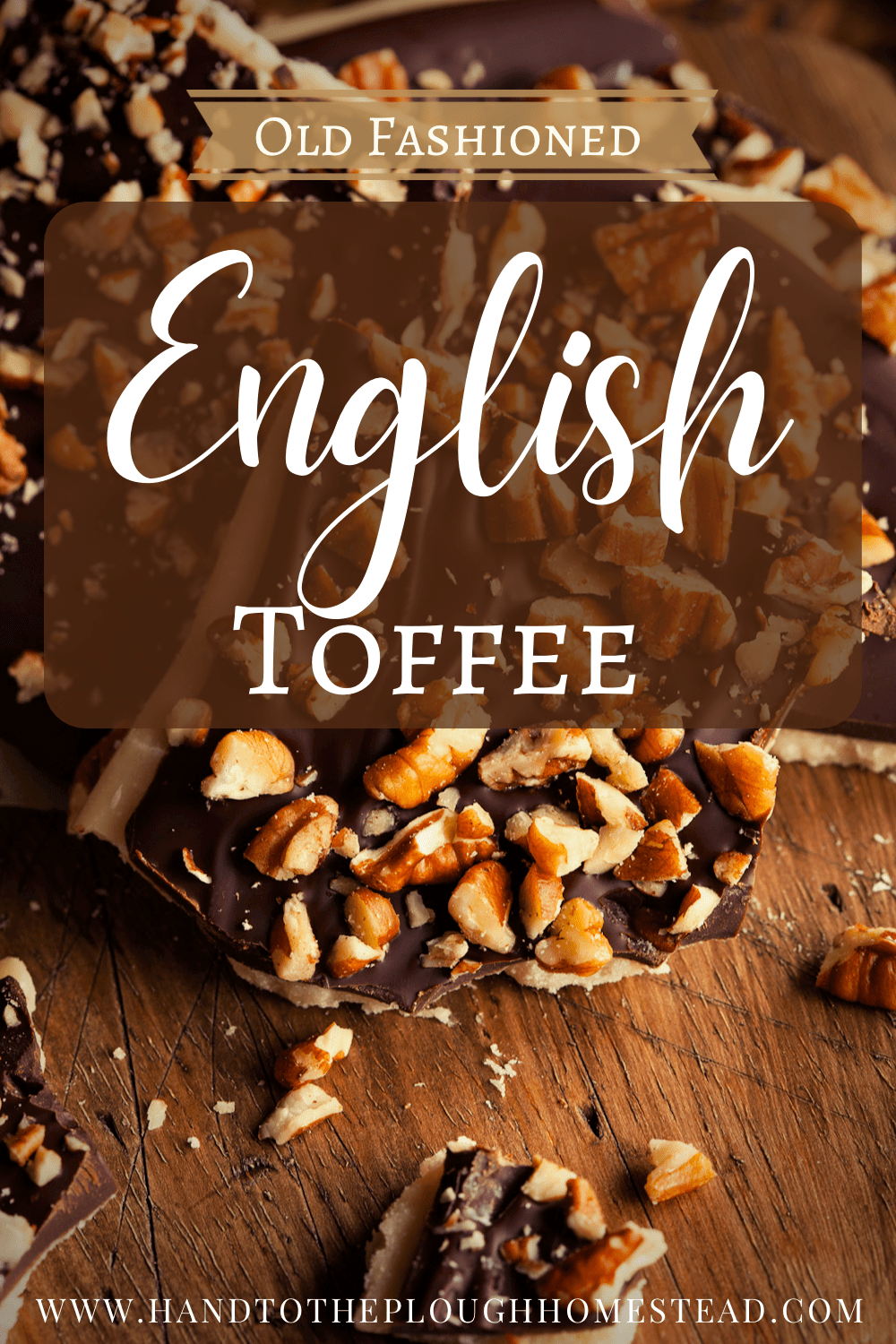
Making and gifting Christmas candy is one of my favorite traditions, and my grandmother’s recipe is a hallmark at our holiday gatherings. A recipe that has worked for at least three generations is the real deal!
Thanks to my Grammy, I have almost certainly had English toffee at nearly every Christmas of my entire life. She even sent me a tin of toffee while I was living in Chile while serving a mission for The Church of Jesus Christ of Latter Day Saints. Somehow Grammy ensures that every family member anywhere in the world gets an individual tin of toffee, and during the holidays her freezer is like a Narnia wardrobe of more toffee.
My mother continued the toffee tradition, so it was naturally a rite of passage for me as well. Christmas just wouldn’t feel right without little glass dishes set around mounded up with glossy shards of buttery, sweet and salty toffee coated with smooth chocolate and crunchy pecans.
If you’ve ever had a failed attempt at confectionary cooking, this recipe will build your confidence. Don’t be intimidated by candy thermometers and boiling temperatures. This old-fashioned recipe is SO SIMPLE and QUICK. Despite its basic ingredients, the results are consistent and elegant. I once whipped up a batch of this toffee last minute for a neighborhood cookie exchange and I won a prize for best tasting!
English toffee is so fancy that people think it is either labor intensive or expensive to produce, but neither is actually the case! It’s guaranteed to impress and yield ample quantities for your effort, which is perfect for mass gifting.
Grammy makes her toffee with dark brown sugar and Hershey’s Symphony milk chocolate. I use light brown sugar and Nestle dark chocolate chips. All of these ingredients will behave the same in this recipe.
Your best friend for making English toffee will be a good candy thermometer. After owning (and breaking) two of these glass candy thermometers,
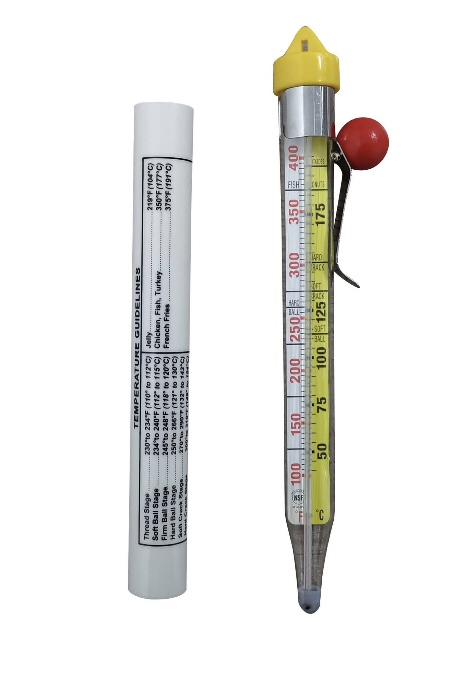
I switched to this ingenious SPATULA THERMOMETER, which allows me to only need one hand to stir. With the glass thermometer I usually ended up wearing oven mitts on both hands in order to hold the tip of the glass bulb in the boiling toffee with one hand while somehow still stirring with a wooden spoon in the other hand. The spatula thermometer is also digital! No more squinting at a rising red line in a glass tube and guessing. Not to mention if the card stock insert shifts inside the tube, as it did in my second glass thermometer, you will never know what the correct temperature actually is.
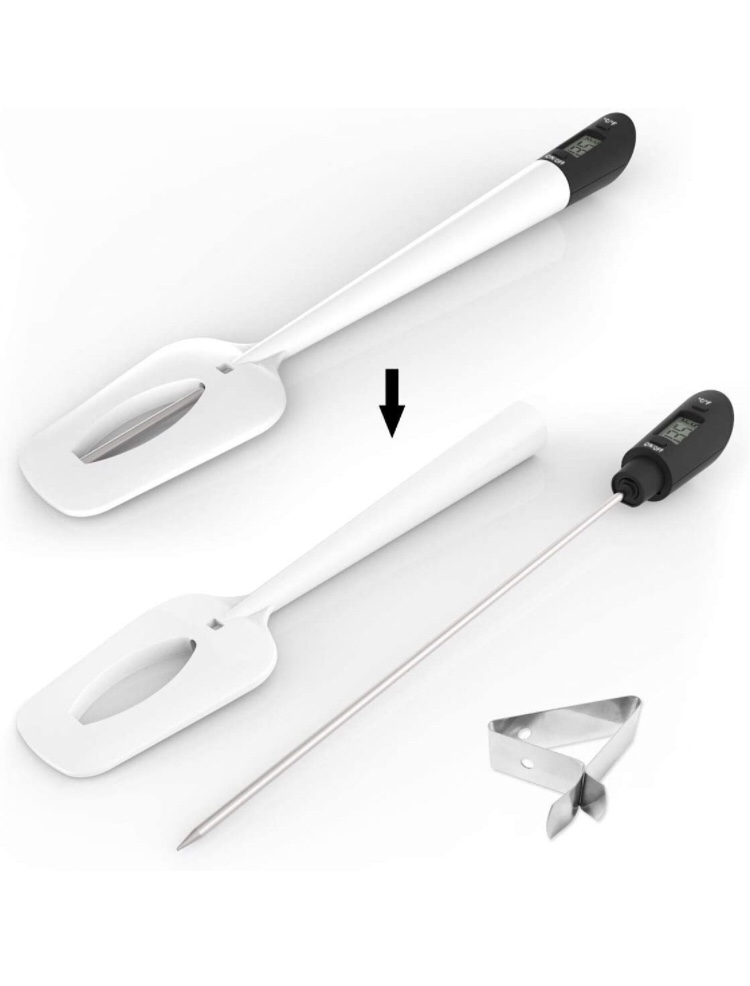
That being said, the glass thermometer does come in a protective tube with a convenient printed chart that educates you about boiling temperatures. For English toffee you want to boil until you reach the “hard crack” stage, or 300 degrees Fahrenheit. I have included the temperature reference chart below.
The old-fashioned way to test candy for done-ness is to drop a small amount of boiling candy in a cup of cold water. If the candy doesn’t hold its shape and the water gets cloudy it is not ready, but if it hardens upon contact with the water, it is ready.
But with the spatula thermometer perfect precision is easy. Now I can make an old fashioned treat with a high-tech kitchen gadget!
- Thread stage: 230-234 degrees Fahrenheit
- Soft ball stage: 234-240 degrees Fahrenheit
- Firm ball stage: 245-248 degrees Fahrenheit
- Hard ball stage: 250-266 degrees Fahrenheit
- Soft crack stage: 270-290 degrees Fahrenheit
- Hard crack stage: 300-310 degrees Fahrenheit
Old Fashioned English Toffee

An easy to make Christmas candy disguised as an elegant confection!
- deep heavy-bottomed pot
- candy thermometer
- silicone spatula
- cookie sheet
- 1 lb butter
- 2 1/4 cups packed brown sugar
- 1 tsp salt
- 2 cups dark chocolate chips
- 1-2 cups chopped pecans
Combine butter, brown sugar and salt in a large, heavy-bottomed stock pot over low heat. Melt slowly, stirring constantly, until all ingredients are incorporated and liquid.
Increase heat to medium-high. Insert candy thermometer and bring mixture to a boil. Stir constantly to avoid scorching. Boil until mixture reaches the "hard crack" stage at 300°.
Immediately pour candy into a half baking sheet and quickly spread the hot toffee with a spatula or wooden spoon as far as possible to all edges of the pan.
Working quickly, sprinkle the surface of the toffee uniformly with chocolate chips. By the time you have finished adding the chips, the chocolate will be warm enough to melt when you spread it with a spatula. Spread evenly over entire surface of the toffee.
Top melted chocolate with chopped pecans and place cookie sheet in the freezer to speed up hardening.
Once firm, the toffee may be cracked into smaller pieces by tapping with a rolling pin or the handle of a heavy butter knife. Store toffee in refrigerator or freezer until serving.

[hubspot type=”form” portal=”23768508″ id=”dcc59ea8-935c-42cd-be2b-7c3b6c9b689f”]

 Hand to the Plough Homestead
Leave a reply to Madelyn Mifchell Cancel reply